Servo-hydraulic Testing Machines – UTM-H Series
Closed-loop servo-hydraulic universal testing machines with high-performance servo valve and 24-bit digital control. 600 kN to 2,000 kN. Precise load, displacement and strain-rate control for the most demanding testing standards.

What Makes a Testing Machine “Servo-hydraulic”?
It’s not just about the hydraulic power — it’s about the precision of the control loop.
A servo-hydraulic testing machine combines the raw force capacity of a hydraulic actuator with the precision of a closed-loop electronic servo control system. Unlike conventional hydraulic machines that rely on manual or proportional valves, the Cermac UTM-H uses a high-performance servo valve that regulates oil flow with micrometric accuracy, responding in real time to feedback from digital sensors.
The proprietary 24-bit digital controller reads signals from the load cell, displacement encoder and extensometer up to 1,000 times per second (1 kHz), continuously adjusting the servo valve to maintain the exact load, speed or strain rate required by the test standard. This closed-loop architecture enables smooth, controlled testing even at very low speeds, and allows real-time switching between control modes during a single test — a requirement of modern standards like ISO 6892-1 Method A.
The result: a machine that delivers the force capacity for testing structural steel at 2,000 kN with the control precision needed for strain-rate-controlled methods on sophisticated extensometer-equipped setups.
How Servo-hydraulic Control Works
Three elements working in a continuous feedback loop — 1,000 times per second.
Key Features of the UTM-H Servo-hydraulic System
High-performance Servo Valve
Proportional servo valve with fast response time controls oil flow to the hydraulic actuator with micrometric precision, enabling smooth movement at any speed within the 0.1–100 mm/min range.
Three Closed-loop Control Modes
Load control (constant stress rate), displacement control (constant crosshead speed) and strain control (constant strain rate via extensometer). Seamless switching between modes during the test.
24-bit / 1 kHz Digital Resolution
Proprietary controller with 24-bit ADC ensures the finest measurable signal is captured. 1 kHz sampling rate provides real-time responsiveness for the most demanding test methods.
Four-column Frame up to 2,000 kN
High-rigidity four-column design absorbs reaction forces and vibrations. Available in 600 kN, 1,000 kN and 2,000 kN configurations for large-section specimens.
Cermac Testing Software
Customisable test masks, real-time data plotting, centralised database with multi-user access, automatic report generation and ISO 6892-1 Method A compliance built in.
Industry 4.0 Integration
TCP/IP LAN connectivity, automatic data export, network-shared database and full traceability. All components developed in-house for seamless integration.
Servo-hydraulic vs Conventional Hydraulic
Understanding why servo control makes a critical difference in test quality and standard compliance.
| Feature | Servo-hydraulic (UTM-H) | Conventional Hydraulic |
|---|---|---|
| Control valve | High-performance servo valve | Proportional or manual valve |
| Feedback loop | Closed-loop, real-time at 1 kHz | Open-loop or slow feedback |
| Control modes | Load, displacement, strain (switchable) | Typically displacement only |
| Strain-rate control | Yes — ISO 6892-1 Method A compliant | Not available |
| Low-speed smoothness | Excellent — micrometric precision | Jerky or stepped movement |
| Digital resolution | 24-bit ADC / 1 kHz | 12–16 bit, lower sampling |
| Extensometer integration | Full closed-loop strain feedback | Measurement only, no control |
| Standard compliance | ASTM E8, ISO 6892, ISO 7500 Class 1 | May not meet latest methods |
Technical Specifications
| Specification | UTM600H | UTM1000H | UTM2000H |
|---|---|---|---|
| Load capacity | 600 kN | 1,000 kN | 2,000 kN |
| Accuracy | Class 1 (or better) from 1% FS — ISO 7500 | ||
| Control modes | Load, displacement, strain (closed-loop) | ||
| Crosshead speed | 0.1 – 100 mm/min | ||
| Actuator stroke | 580 mm | 680 mm | 800 mm |
| Max. vertical clearance | 600 mm | 700 mm | 800 mm |
| Test area width | 480 mm | 660 mm | 800 mm |
| Frame dimensions | 880×630×3000 mm | 1000×800×3500 mm | 1220×900×4000 mm |
| Frame weight | 3,200 kg | 5,000 kg | 8,500 kg |
| Hydraulic unit | 680×1100×930 mm — 400 kg | ||
| Power supply | 7 kW — 400 VAC / 50 Hz / 3-phase (5-wire) | ||
| Digital resolution | 24-bit ADC / 1 kHz | ||
Testing Standards
The servo-hydraulic control system meets the most demanding test methods in current standards.
Tensile testing with strain-rate-controlled method — requires closed-loop extensometer feedback, which the UTM-H servo system provides natively.
Standard test methods for tension testing of metallic materials.
Mechanical testing of steel products — tensile, bend and hardness.
Carbon-steel bars for concrete reinforcement.
Steel for reinforcement of concrete — test methods and weldable reinforcing steel.
Verification of static uniaxial testing machines — Class 1 accuracy requirement met by the servo-hydraulic control system.
Applications
-
Steel mills and foundries — production QC on structural steel, plate, bar and section products under high loads with strain-rate-controlled testing to the latest ISO 6892 methods.
-
Construction laboratories — tensile testing of rebar, reinforcement mesh and prestressing strands per EN 15630, EN 10080 and ASTM A615.
-
Accredited testing laboratories — ISO 17025 accredited labs requiring traceable, closed-loop servo control with documented Class 1 accuracy for certification testing.
-
Oil & gas — tensile and proof load testing of pipeline steels, pressure vessel materials, flanges and tubular products.
-
Heavy industry — testing large forgings, castings and structural components where loads exceed 600 kN.
-
Fastener manufacturers — tensile, shear and proof load testing of high-strength bolts M10–M30 per ISO 898-1 and ASTM F606.
Why Choose Cermac Servo-hydraulic Systems
Unlike manufacturers that integrate third-party controllers, Cermac designs all core components in-house — frame, hydraulic system, servo electronics, firmware and testing software — at our ISO 9001:2015 certified facility near Milan. This means the servo valve, the controller and the software are designed to work together as a single, optimised system rather than a patchwork of third-party components.
The benefit for you: faster commissioning, easier calibration, single-point technical support and the ability to customise control parameters, reporting and interfaces to your exact requirements.
Frequently Asked Questions
What is a servo-hydraulic testing machine?
A servo-hydraulic testing machine uses a hydraulic actuator controlled by an electronic servo valve with closed-loop digital feedback. The servo valve regulates oil flow with micrometric precision, enabling accurate real-time control of load, displacement and strain rate — far beyond conventional hydraulic systems.
What is the difference between servo-hydraulic and conventional hydraulic?
Conventional hydraulic machines use simple proportional or manual valves with limited feedback. Servo-hydraulic systems use a high-performance servo valve with 24-bit closed-loop control at 1 kHz, enabling three control modes (load, displacement, strain), smooth low-speed operation and compliance with modern strain-rate-controlled test methods.
What control modes does the system support?
Load control (constant stress rate), displacement control (constant crosshead speed) and strain control (constant strain rate via extensometer). The system can switch between modes during a single test as required by ISO 6892-1 Method A.
What load capacities are available?
Three models: UTM600H (600 kN), UTM1000H (1,000 kN) and UTM2000H (2,000 kN). All with four-column high-rigidity frame.
What standards does the machine comply with?
ASTM E8, ASTM A370, ASTM A615, ISO 6892-1 (including Method A), ISO 7500-1 Class 1, EN 15630, EN 10080 and related standards.
Machines & Accessories in Action
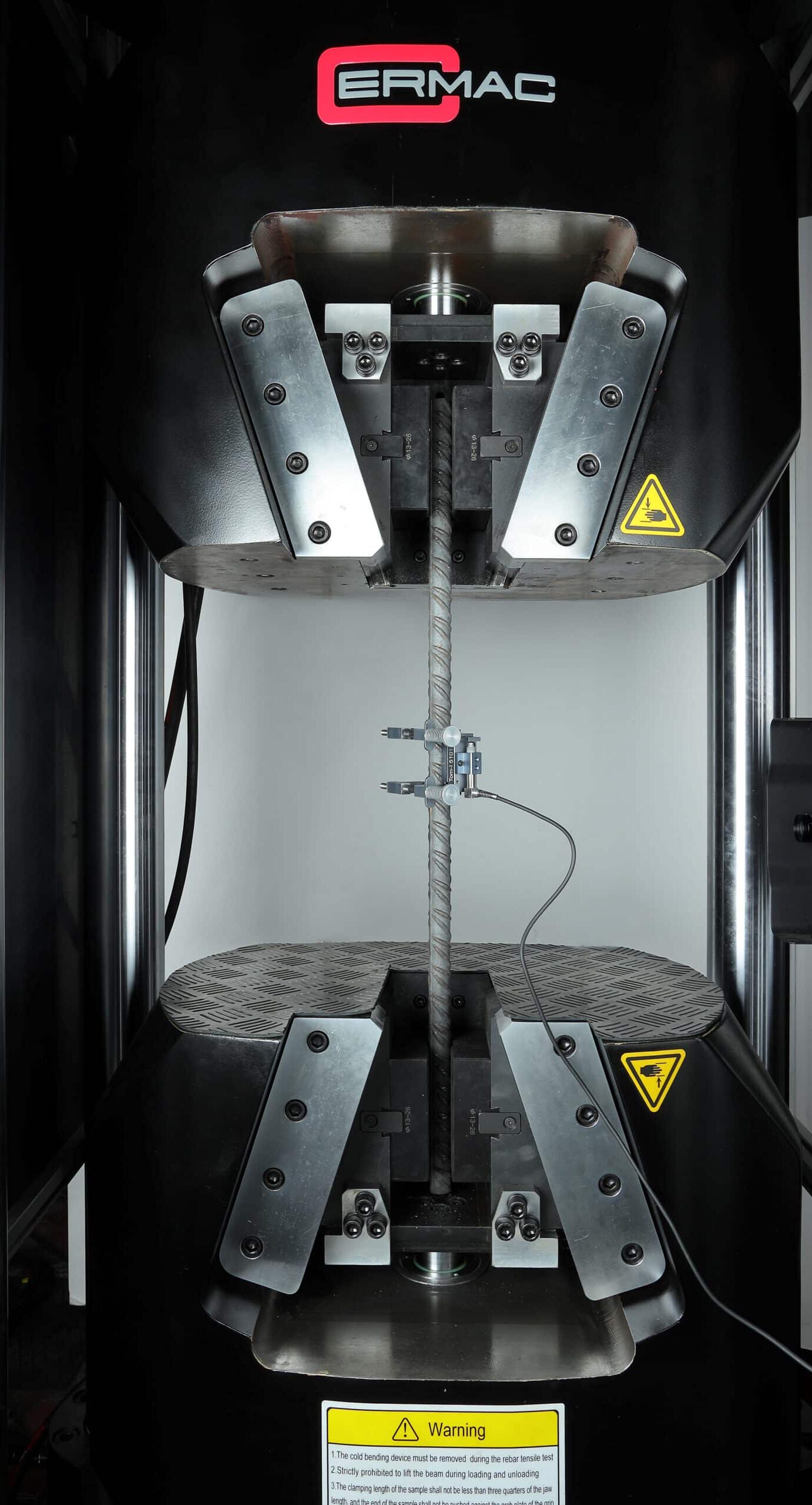
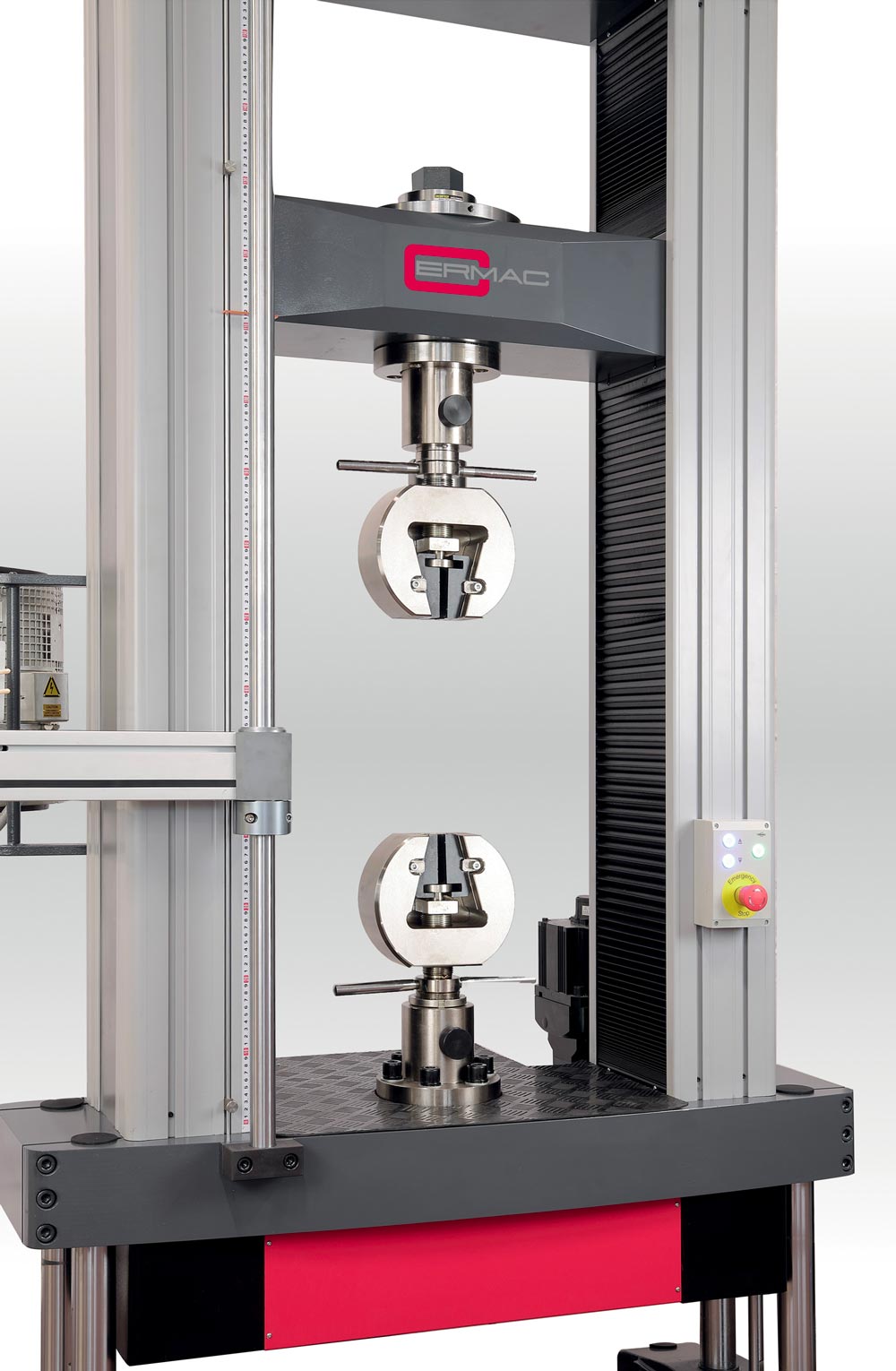
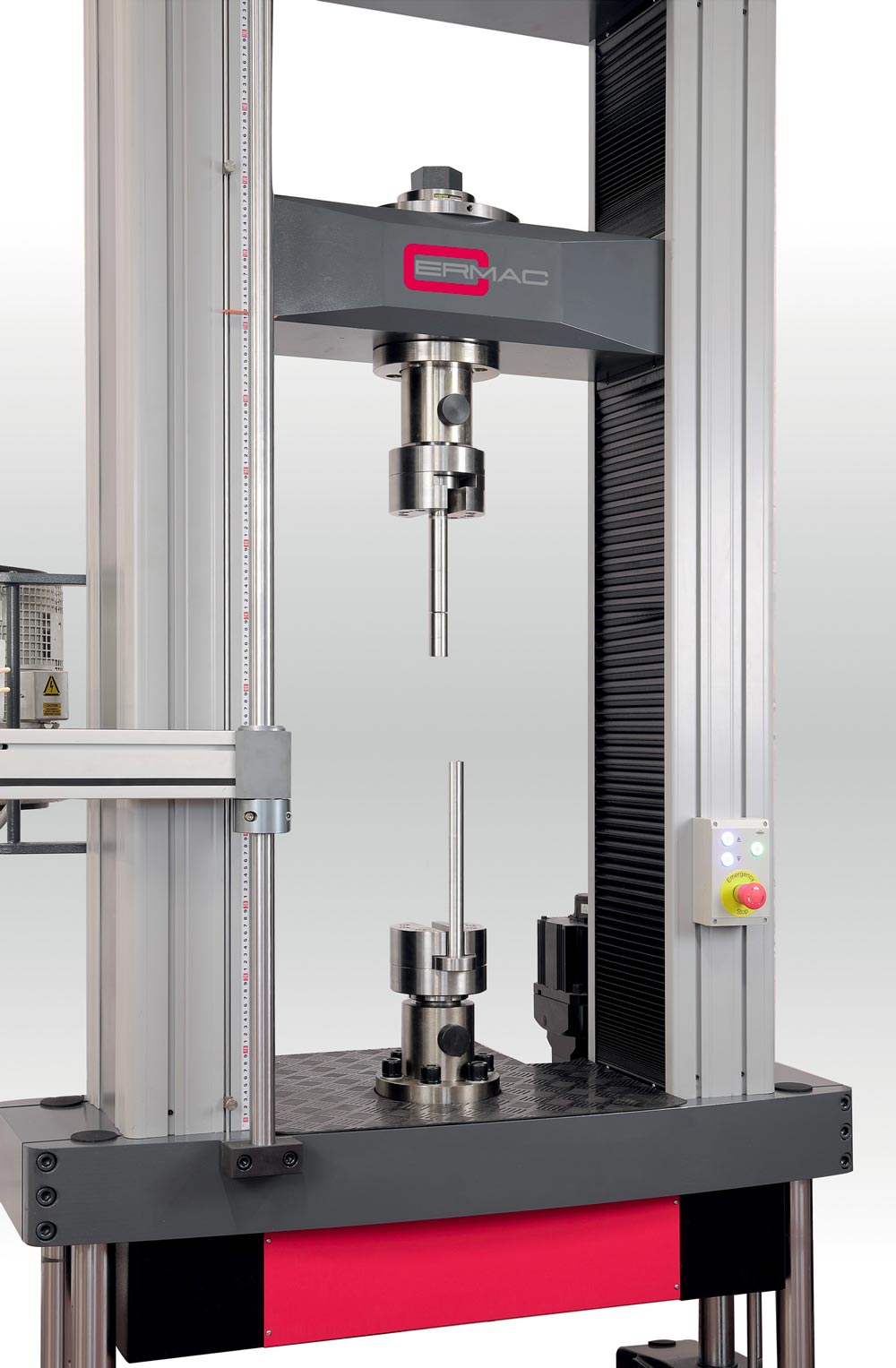
Cermac testing machines and accessories configured for real laboratory applications.
Tailored to Your Laboratory
At Cermac, every testing machine can be fully customised to match your specific requirements. From frame configuration and load capacity to grips, fixtures and software interfaces — we design the complete system around your laboratory’s workflow, materials and testing standards.
Our engineering team works directly with you to identify the optimal solution: the right machine, the right accessories and the right configuration to maximise productivity and ensure compliance from day one.
Every Cermac machine is compatible with a comprehensive range of dedicated testing accessories — extensometers, grips, furnaces, bending fixtures, impact accessories and more. Explore the full accessories catalogue →
Request a Quote for Servo-hydraulic Testing Machines
Tell us your testing requirements — capacity, standards, control modes — and our engineering team will respond within 24 business hours.