Bending & Flexure Testing Machines
3-point and 4-point bending test systems for plastics, composites, metals, concrete and rebar. Complete with dedicated fixtures, CMOD clip-gage and video extensometry.

Bending Testing Machines for Flexural Properties Determination
Accurate flexural strength, modulus and deflection measurement — from thin plastic specimens to full-size concrete beams.
A bending testing machine (or flexure testing machine) applies a transverse load to a specimen supported at two points to determine its flexural properties — including flexural strength, flexural modulus, deflection at break and post-cracking behaviour. Bending tests are critical for characterising plastics, composites, metals, wood, concrete and construction materials.
Cermac’s UTM Series universal testing machines are configured with dedicated bending fixtures for both 3-point bending and 4-point bending tests. With load capacities from 0.1 kN to 2,000 kN, 24-bit digital control and Class 0.5 or Class 1 accuracy, the range covers everything from thin plastic coupons to full-size fibre-reinforced concrete beams.
For concrete beam testing to EN 14651, Cermac offers a dedicated CMOD clip-gage (Crack Mouth Opening Displacement) with 0.0001 mm resolution, enabling precise measurement of the post-cracking behaviour of fibre-reinforced concrete (FRC).
Bending Test Configurations
3-point Bending
Single loading nose at centre, two support rollers. The most common configuration for ISO 178, ASTM D790 and general flexural testing of plastics, composites and metals. Maximum stress occurs at the centre of the specimen.
4-point Bending
Two loading noses creating a uniform bending moment between them. Preferred for brittle materials, composites and concrete beams. Failure occurs in the constant-moment zone, avoiding stress concentration effects.
CMOD Beam Testing
Notched concrete beam testing to EN 14651 with CMOD clip-gage (0.0001 mm resolution) measuring crack mouth opening. Essential for characterising fibre-reinforced concrete post-cracking behaviour.
Rebar Bend & Rebend
Mandrel bending and rebend testing of reinforcement bars per EN 15630 and ASTM A615. Dedicated fixtures with interchangeable mandrels for different bar diameters.
24-bit Closed-loop Control
Real-time load and displacement control at 1 kHz. Essential for controlled-rate bending tests and for capturing post-peak behaviour in quasi-brittle materials.
Adjustable Span Fixtures
Bending fixtures with adjustable support span and interchangeable loading noses to accommodate different specimen sizes, test standards and span-to-depth ratios.
Bending Testing Standards
Flexural properties of rigid and semi-rigid plastics and composites by 3-point bending.
Flexural properties of polymer matrix composite materials — 3-point and 4-point loading.
Test method for metallic fibre-reinforced concrete — measuring flexural tensile strength and CMOD.
Flexural strength of hardened concrete test specimens.
Bend and rebend tests on steel reinforcement bars and mechanical testing of steel products.
Metallic materials — bend test to assess ductility and soundness.
Applications
-
Plastics and composites — flexural strength and modulus of rigid plastics, glass fibre, carbon fibre and FRP laminates per ISO 178 and ASTM D790.
-
Fibre-reinforced concrete — notched beam tests with CMOD measurement per EN 14651 for post-cracking characterisation of steel and synthetic fibre concrete.
-
Concrete and mortar — flexural strength of hardened concrete prisms per EN 12390-5 and ASTM C78.
-
Rebar and steel — bend and rebend tests on reinforcement bars per EN 15630, ASTM A615 and ASTM A370.
-
Metals and alloys — bend tests to assess ductility and soundness of welds, sheet metal and bar products per ISO 7438.
-
Wood and timber — bending strength and stiffness of structural timber, engineered wood and wood-based panels.
-
Ceramics and glass — flexural strength of technical ceramics, tiles and glass specimens.
Bending Test Accessories
Dedicated fixtures and measurement systems for every bending test application.
3-point Bending Fixtures
Adjustable span, hardened rollers, interchangeable loading noses. Standard and customised configurations.
4-point Bending Fixtures
Two loading rollers with adjustable inner and outer span for uniform moment zone testing.
CMOD Clip-gage
High-precision strain-gauge clip-gage (0.0001 mm resolution, 8 mm range) for crack mouth opening measurement on concrete beams per EN 14651.
Bend/Rebend Mandrels
Interchangeable mandrel sets for rebar bend and rebend testing per EN 15630 and ASTM A615.
Video Extensometer
Non-contact optical deflection measurement. ISO 9513 compliant. Ideal for fragile specimens where contact sensors would alter results.
Why Cermac for Bending Testing
Cermac’s universal testing machines handle bending tests as one of multiple test modes — alongside tensile, compression and flexure — making them the most efficient investment for multi-test laboratories. Every machine includes the Cermac Testing software with pre-configured test masks for major bending standards, and our in-house engineering team can develop custom fixtures for non-standard specimens.
Frequently Asked Questions
What is a bending testing machine?
A bending testing machine applies a transverse load to a specimen supported at two or more points to determine flexural strength, modulus, deflection and failure behaviour. The most common setups are 3-point and 4-point bending.
What is the difference between 3-point and 4-point bending?
3-point bending applies force at a single central point, concentrating stress there. 4-point bending uses two loading points, creating a uniform bending moment between them — preferred for brittle materials and when failure should occur away from a stress concentration.
What materials can be tested?
Rigid plastics, composites, metals, concrete beams (with CMOD), rebar (bend/rebend), wood, ceramics, glass and any material requiring flexural characterisation.
What is a CMOD test?
CMOD (Crack Mouth Opening Displacement) testing measures the opening of a notch in a concrete beam during bending, per EN 14651. Cermac offers a dedicated clip-gage with 0.0001 mm resolution for this purpose.
Can the same machine do tensile and bending tests?
Yes. All Cermac UTMs are universal machines — switch between bending, tensile, compression and other tests by changing the fixtures.
Machines & Accessories in Action
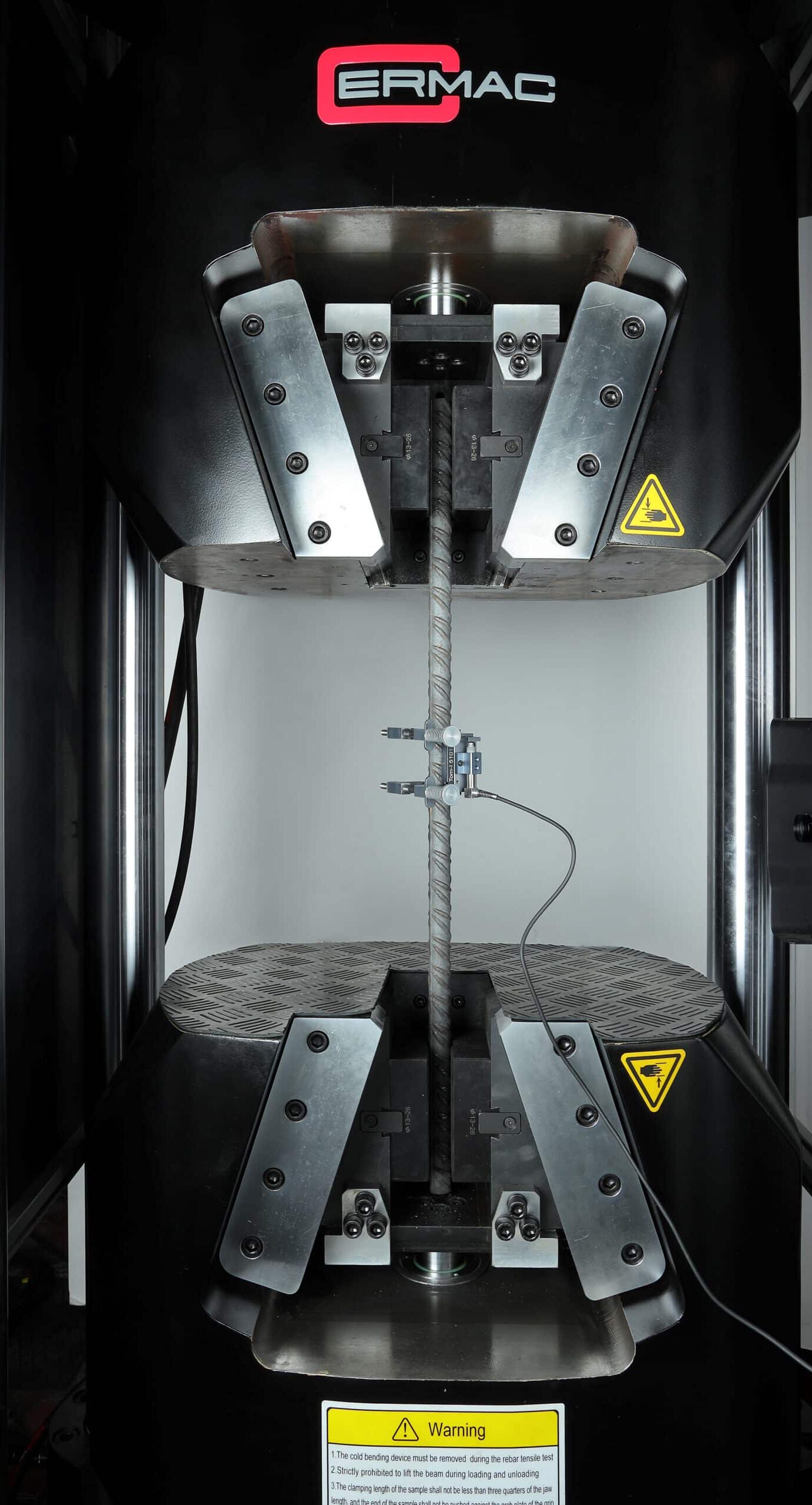
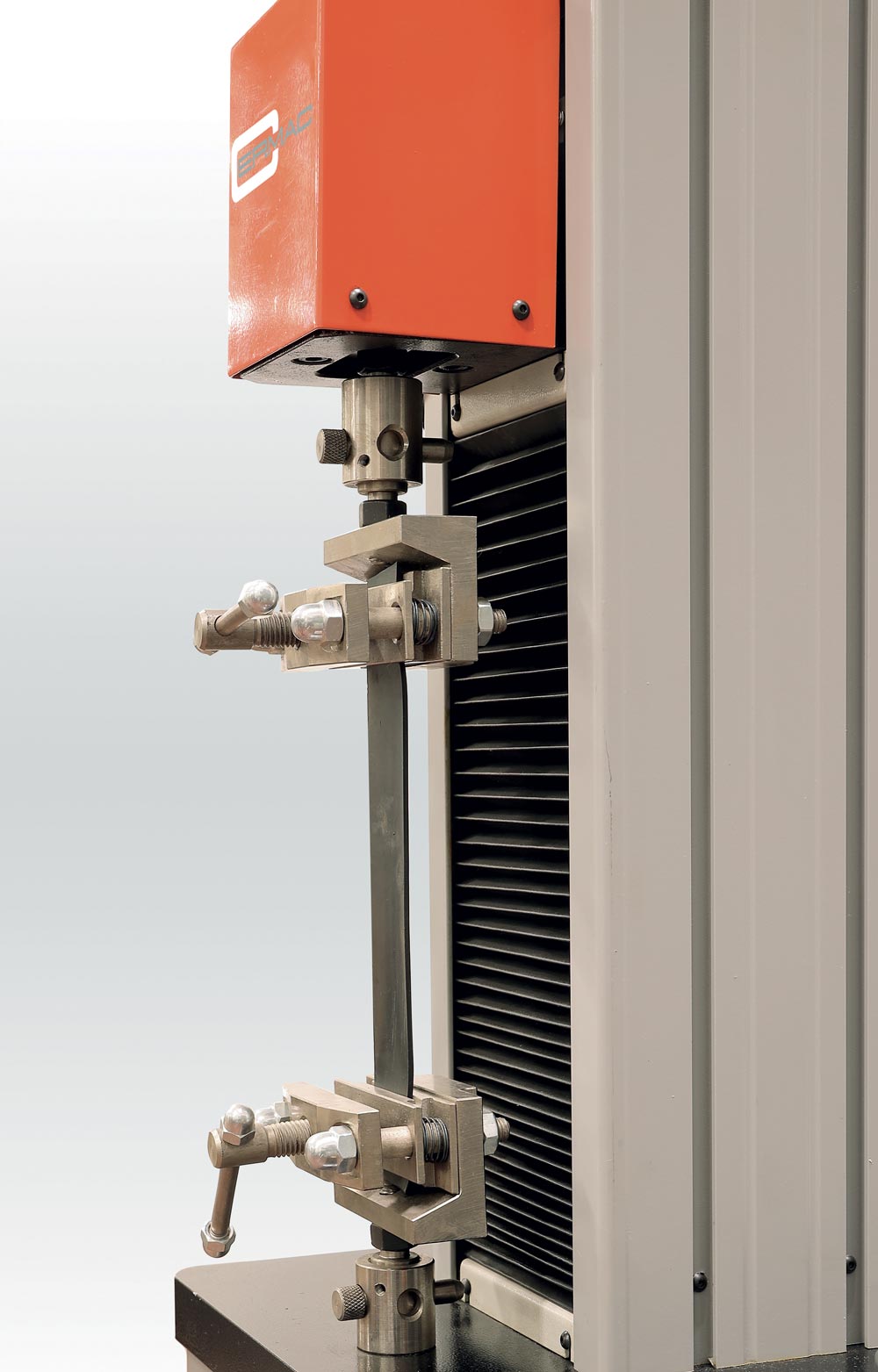
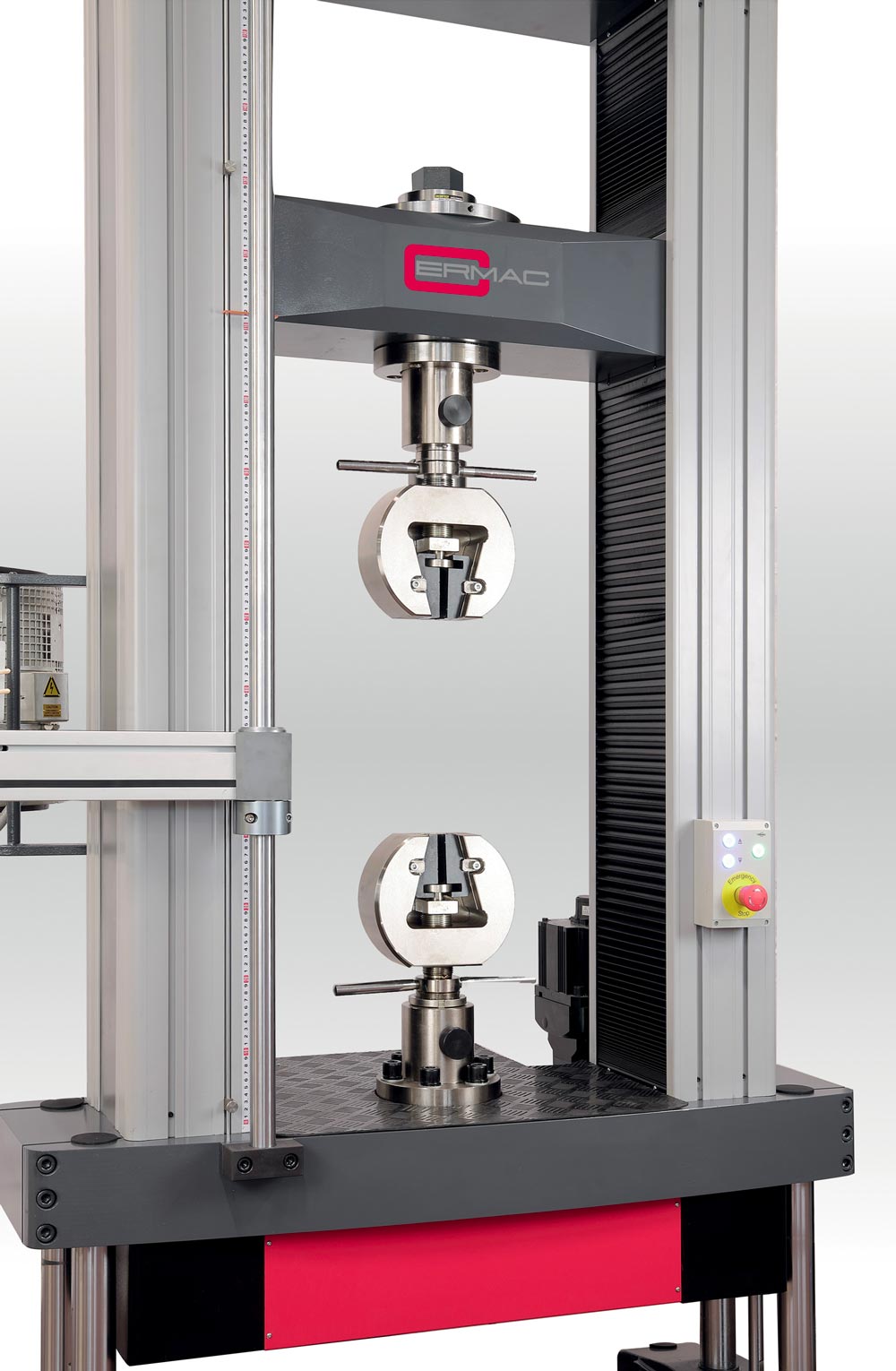
Cermac testing machines and accessories configured for real laboratory applications.
Tailored to Your Laboratory
At Cermac, every testing machine can be fully customised to match your specific requirements. From frame configuration and load capacity to grips, fixtures and software interfaces — we design the complete system around your laboratory’s workflow, materials and testing standards.
Our engineering team works directly with you to identify the optimal solution: the right machine, the right accessories and the right configuration to maximise productivity and ensure compliance from day one.
Every Cermac machine is compatible with a comprehensive range of dedicated testing accessories — extensometers, grips, furnaces, bending fixtures, impact accessories and more. Explore the full accessories catalogue →
Request a Quote for Bending Testing Equipment
Tell us about your bending test requirements — materials, standards, specimen sizes — and our team will respond within 24 business hours.