
Home / Tensile testing on composite materials
Tensile testing
Tensile testing on composite materials
Glass, carbon and aramid fibre laminates, short-fibre composites and sandwich structures: strength, modulus and strain at break.
Why it is done
Properties that change with direction
A composite does not have a single strength: it depends on fibre orientation, lay-up sequence and fibre content. The test must be repeated in the directions that matter to the design.
Specimens are parallel-sided strips with end tabs bonded at the ends, to protect the fibres from the pressure of the jaws. Specimen alignment is critical: a small parasitic bending brings failure forward and lowers the values.
The tensile test on ±45° laminates is instead used to obtain the in-plane shear properties.
What is measured
The parameters the test returns
The stress-strain curve gives the values found in data sheets and material qualifications.
Tensile strength
Tensile modulus of elasticity
Strain at break
Poisson's ratio
Failure mode and location
Reference standards
The most widely used standards
The standard depends on the type of composite and on the fibre orientation.
- ASTM D3039: tensile properties of polymer matrix composites.
- EN ISO 527-4: isotropic and orthotropic fibre-reinforced composites.
- EN ISO 527-5: unidirectional composites.
- ASTM D3518: in-plane shear by means of a ±45° tensile test.
See also: tests on carbon fibre and tests on FRP, FRCM and CRM.
Machines and accessories
What you need in the laboratory
Machine, strain measurement and acquisition software: the configuration depends on the material, the specimen size and the standard. We define the grips together with you.
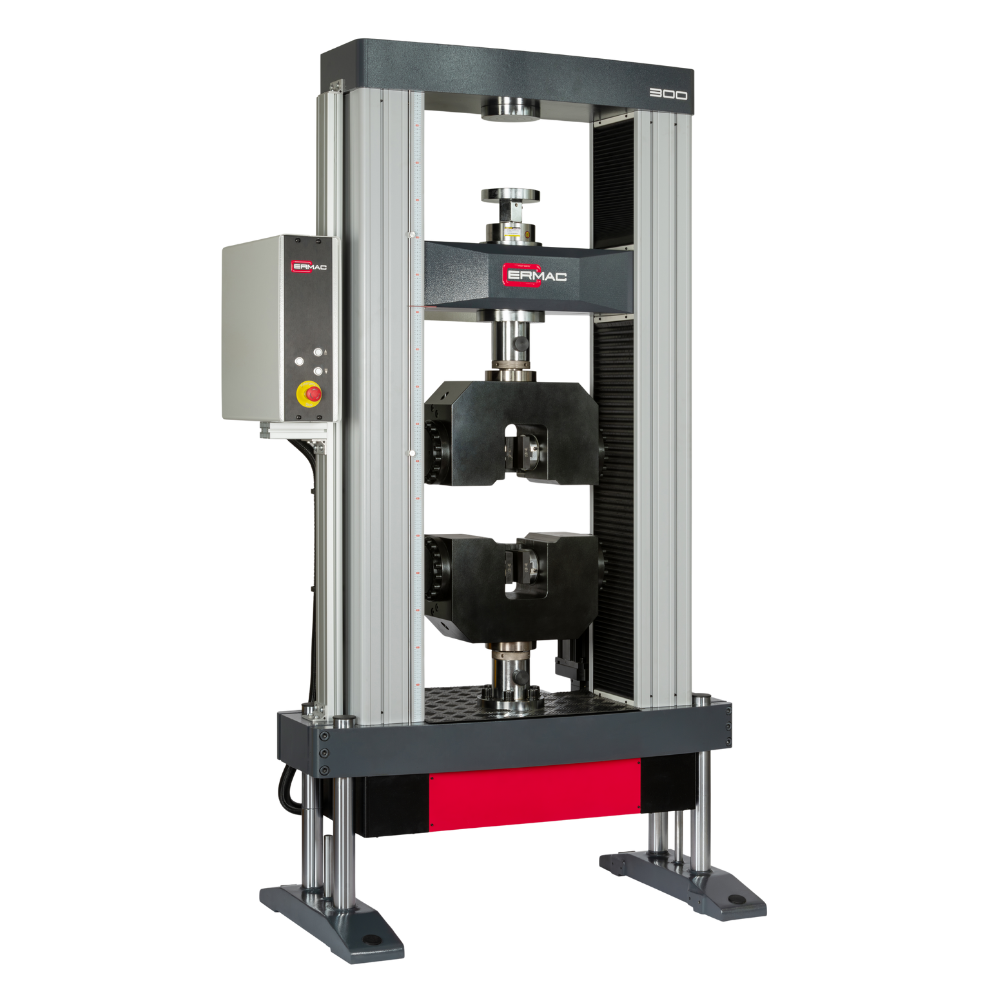
UTM-E Series 50–400 kN
Servo-controlled electromechanical machines for tensile, compression, bend and flexure tests.
UTM-E
Capacity 50–400 kN

UTM-D Series
Benchtop machines with single or double column for metallic and non-metallic materials.
UTM-D
Capacity 0.1–20 kN
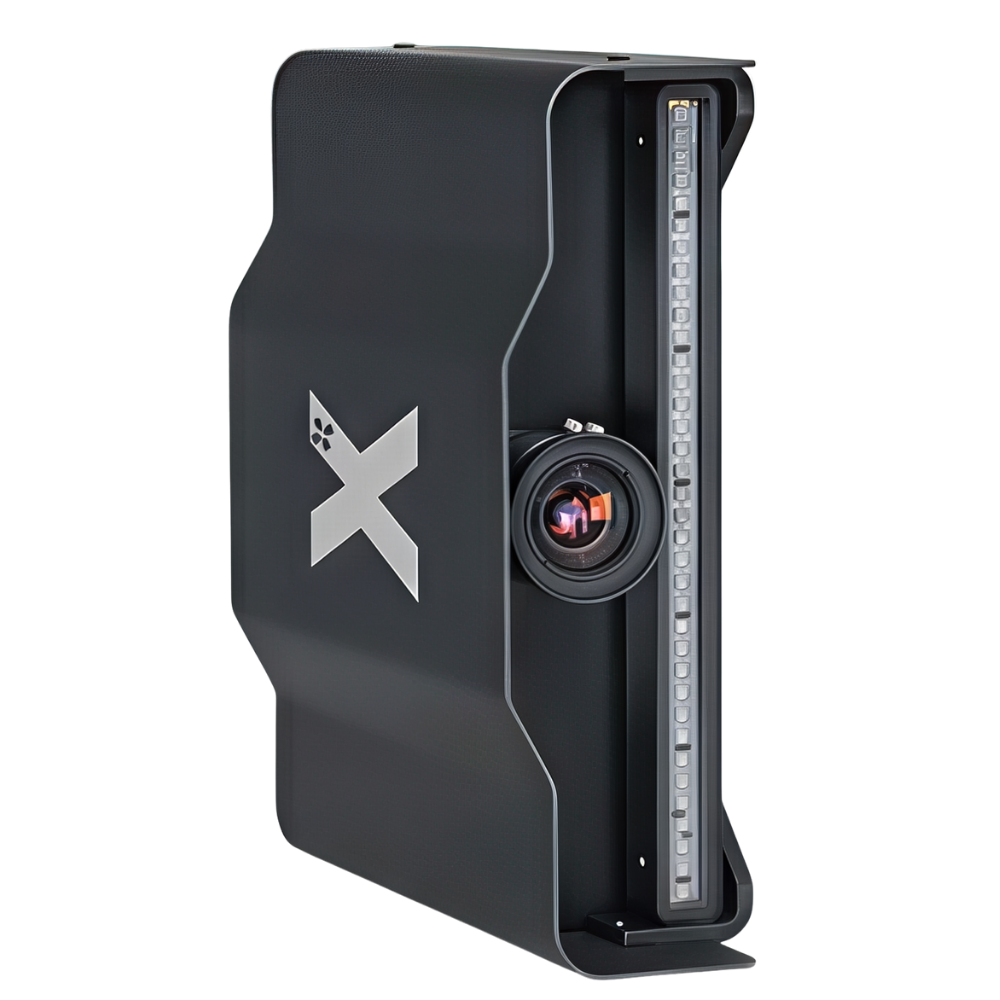
Video extensometers
Non-contact strain measurement, right up to specimen failure.
M5 · M9
Resolution 5 · 9 Mpixels
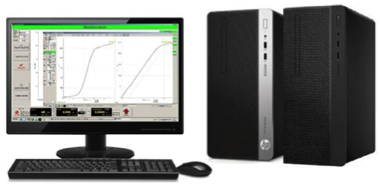
TestingXE system
CERMAC datalogger, firmware and software to acquire, store and certify the results.
TestingXE
Datalogger 24 bit
Frequently asked questions
Tensile testing on composite materials
Why are end tabs needed?
The jaws damage the fibres and cause failures at the ends, which are not valid. The end tabs spread the grip and move the failure into the gauge length.
How is strain measured?
With strain gauges or with a video extensometer, which also measures the transverse strain for Poisson's ratio without touching the specimen.
How many directions need to be tested?
At least the main directions of the laminate, usually 0° and 90°. Qualification standards set the number of specimens and the orientations.
Which standards apply?
ASTM D3039 and EN ISO 527-4/-5 for tension, ASTM D3518 for in-plane shear obtained from a tensile test.
Let's talk
Do you need to qualify a laminate?
Tell us the material, standard and specimen geometry: we will propose the right machine, grips and measuring system, which can also be integrated on a machine you already have.
TC
CERMAC Team · Applications & configuration
Replies within 24 working hours
Quality and accreditations

ISO 9001:2015
Quality system

CE marking
European conformity

EN ISO 7500-1
Force calibration

Made in Italy
In-house assembly

