
Home / Tensile testing on metallic materials at low temperatures
Tensile testing
Tensile testing on metals at low temperatures
Tensile behaviour of steels and alloys below zero and in the cryogenic range, for tanks, gas pipelines, LNG plants and structures in cold climates.
Why it is done
When the cold changes the material
As temperature drops, many metals become stronger but less ductile. For those who design components that work in the cold, values measured at service temperature are needed.
The test is carried out with the specimen in a conditioning chamber or immersed in a cooling fluid, held at test temperature for the time needed to make it uniform. Grips, extensometer and load transmission must work at the same temperature.
For toughness at low temperature, the tensile test is almost always accompanied by the Charpy impact test.
What is measured
The parameters the test returns
The force-elongation curve gives the values required by product standards, certificates and specifications.
Yield: ReH, ReL or Rp0.2
Tensile strength Rm
Percentage elongation after fracture A
Reduction of area Z
Change in properties compared with room temperature
Reference standards
The most widely used standards
The standards define conditioning, stabilisation times and temperature tolerances.
- ISO 6892-3: tensile testing of metallic materials at low temperature.
- ASTM E1450: tension testing of structural alloys in liquid helium, for the cryogenic range.
- EN ISO 6892-1: reference method at room temperature, for comparison.
See also: tests at high temperatures and how the Charpy pendulum works.
Machines and accessories
What you need in the laboratory
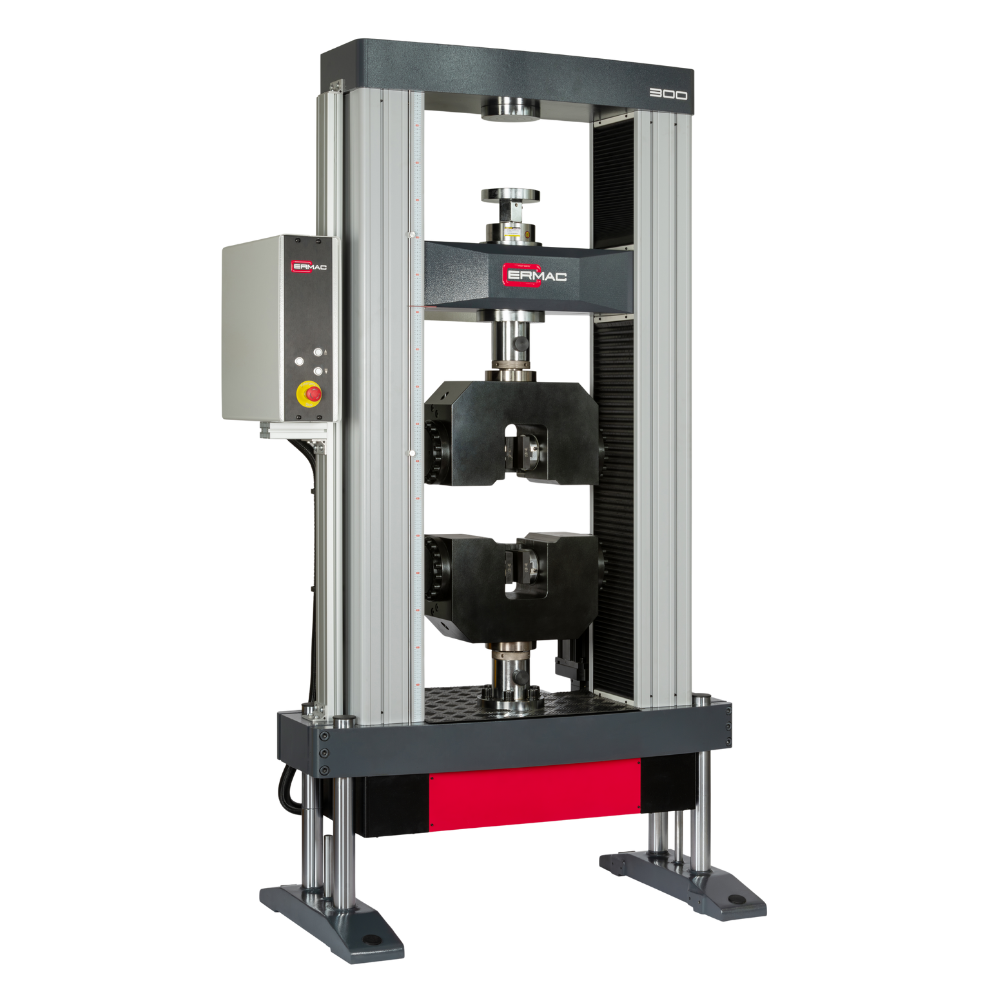
Machine, strain measurement and acquisition software: the configuration depends on the material, the specimen size and the standard. We define the grips together with you.
UTM-E Series 50–400 kN
Servo-controlled electromechanical machines for tensile, compression, bend and flexure tests.
UTM-E
Capacity 50–400 kN
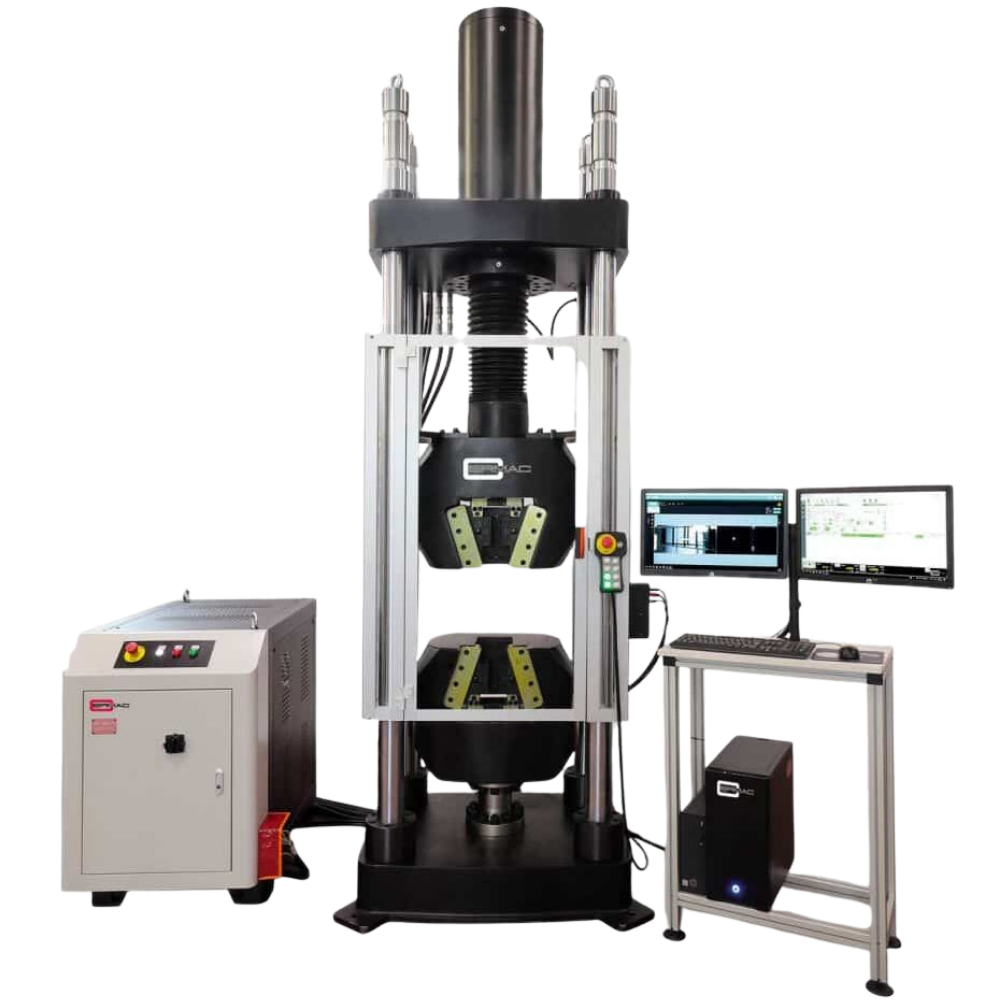
UTM-H Series
Servo-controlled hydraulic machines for tensile, compression, bend and flexure tests.
UTM-H
Capacity 600–2000 kN
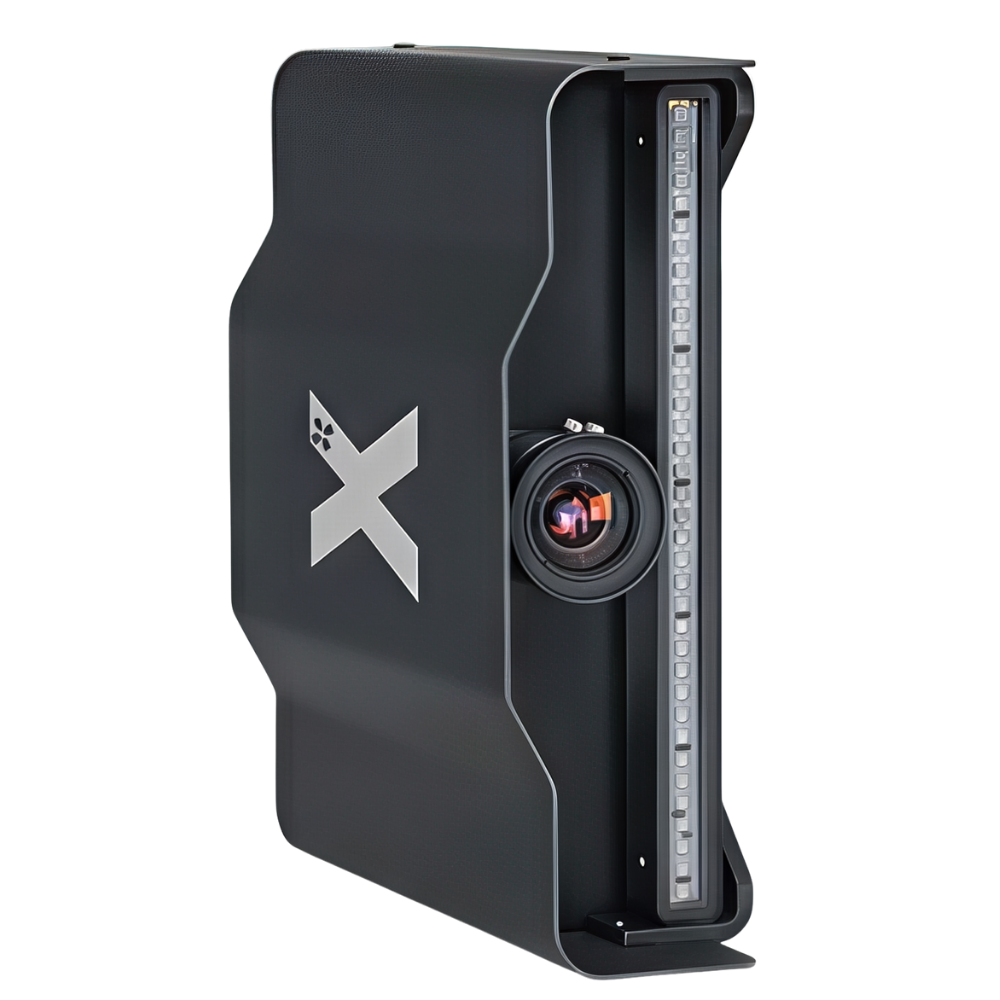
Video extensometers
Non-contact strain measurement, right up to specimen failure.
M5 · M9
Resolution 5 · 9 Mpixels
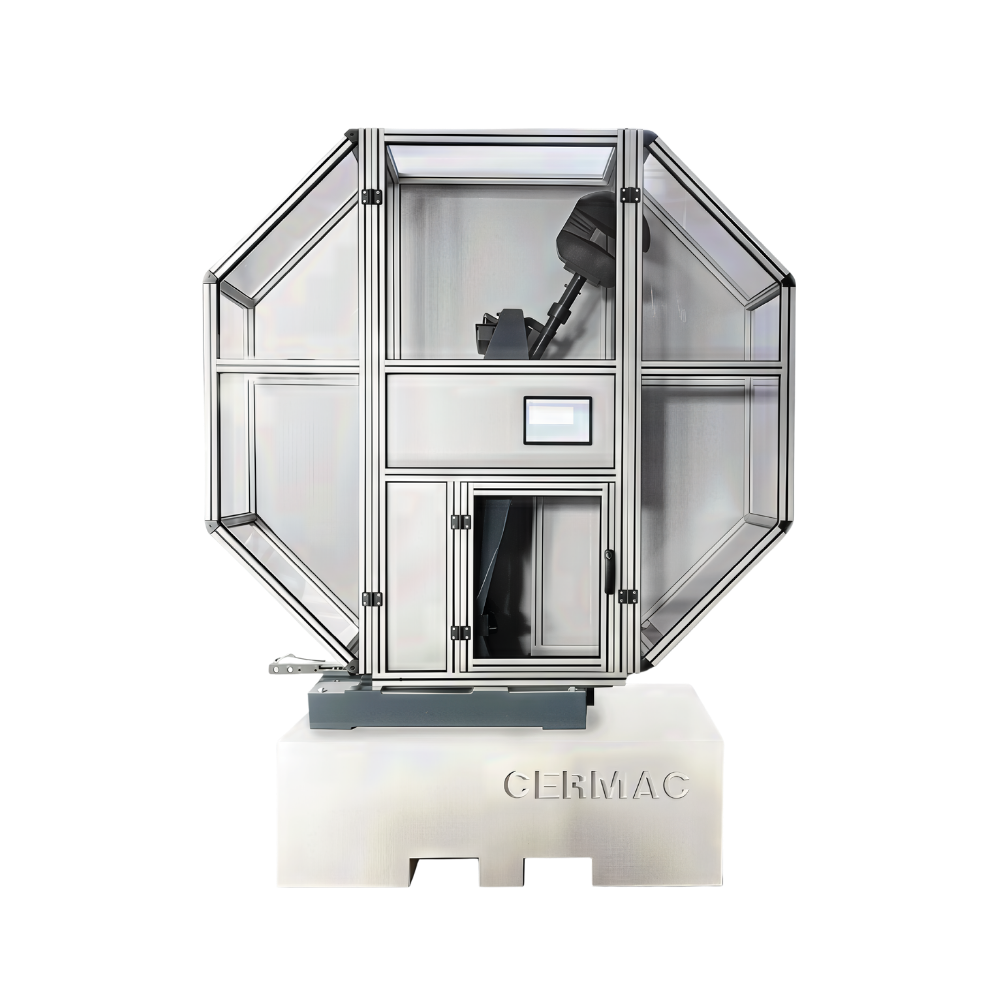
Charpy pendulum ITM Series
Automatic pendulums for impact tests on metals and welds.
ITM
Energy 300 · 450 · 750 J
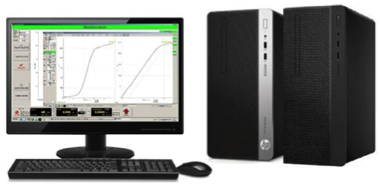
TestingXE system
CERMAC datalogger, firmware and software to acquire, store and certify the results.
TestingXE
Datalogger 24 bit
Frequently asked questions
Tensile testing on metallic materials at low temperatures
How is the specimen brought to temperature?
With a conditioning chamber mounted on the machine or by immersion in a cooling fluid. The configuration is defined according to the temperature range and the standard.
Why is the Charpy test also carried out?
Because the tensile test alone does not show the ductile-brittle transition. Impact energy at low temperature is measured with the Charpy pendulum.
Which standards apply?
ISO 6892-3 down to the usual low temperatures, ASTM E1450 for tests in liquid helium.
Can you configure a machine for cold tests?
Yes: starting from our universal machines we define with you the chamber, grips and strain measurement for the temperature range you need.
Let's talk
Do you need to test materials for service in the cold?
Tell us the material, standard and specimen geometry: we will propose the right machine, grips and measuring system, which can also be integrated on a machine you already have.
TC
CERMAC Team · Applications & configuration
Replies within 24 working hours
Quality and accreditations

ISO 9001:2015
Quality system

CE marking
European conformity

EN ISO 7500-1
Force calibration

Made in Italy
In-house assembly

